Second chances and redemption
Other PeopleSecond chances and redemption form a motif that the novel treats with both skepticism and hope. Religious and recovery literature offers the promise that lives can be repaired, but its assurances do not automatically change the circumstances of the people who hear them. For Mary, a second chance becomes most tangible not as a guaranteed spiritual resolution but as an opportunity to work and continue living.
Promises of recovery
Mary reads devotional material that presents redemption as readily available: everyone has another chance, and God will put things right. The pamphlets from Al-Anon offer a related account of recovery, describing the conduct and decline associated with alcoholism and holding out faith in Alcoholics Anonymous and God as the route to a better ending. These texts give suffering a framework, but their confidence sits uneasily beside the hardship of the women Mary encounters. When Mrs Pilkington observes that they have lost everything and have nothing, Mary agrees with her in detail.
The contrast is sharpened by the Botham household’s disagreement over what recovery means. Mr Botham calls Mrs Botham an ex-alcoholic; Gavin calls her an alcoholic; Mrs Botham rejects the idea that anyone can become an ex-alcoholic. She repeatedly explains the value she places on sobriety, even as Mary recognizes that Mrs Botham is drunk and repeating what she has already said. The scene makes redemption neither a simple change of label nor a finished state: the language of recovery persists alongside behavior that unsettles its promise.
Mary’s search for another chance
Mary’s own hope is shaped by uncertainty about who she is and by the absence of news about herself. The narrator places her among women who have fallen on hard times and are looking for a break, making her need part of a shared condition rather than an exceptional claim. The religious assurance that a second chance exists reaches her in this context, but the novel does not present belief alone as the event that changes her prospects.
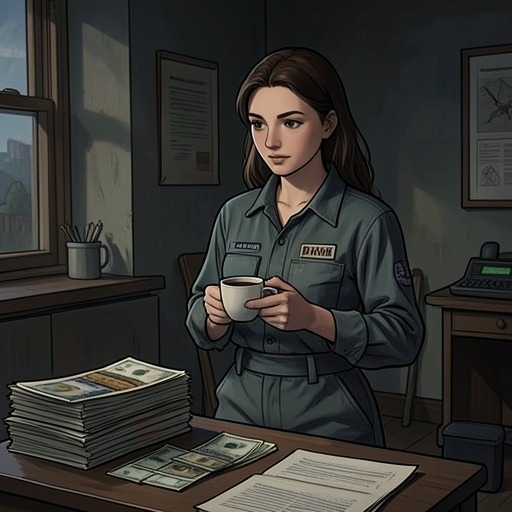
A shift comes when Mary, deliberately avoiding familiar routes through the city, wanders into a busy area of ramshackle houses and shops. A message in a dark window is briefly obscured by sunlight and then becomes legible again: a waitress is wanted. The episode turns the idea of a chance into something she can act on. After speaking with Mr Garcia, Mary leaves optimistic; although she has no Insurance number, she believes she can do the work. The opening is modest and practical, not a promise that her past or uncertainty has vanished.
The limits and force of redemption
Mrs Botham’s story of a clinic acquaintance who woke after a head injury unable to recognize her husband or children echoes, without resolving, Mary’s own difficulty with memory and identity. It offers an example of a person whose life has been disrupted and whose mind is described as a blank, but it does not establish that memory loss is itself a path to renewal. In the same household, competing accounts of alcoholism show how readily the language of a fresh start can collide with a persistent condition.
The motif therefore holds two meanings in tension. Redemption is a consoling doctrine in the devotional books and recovery pamphlets, and an uncertain promise in the lives of people still facing poverty, addiction, or personal dislocation. Yet Mary’s response to the waitress notice gives the idea material force: she accepts a possible opening and believes she can meet its demands. The novel locates hope not in proof that everything will turn out right, but in the small, consequential chance to begin again.